An Introduction to Europe’s Dark Heart
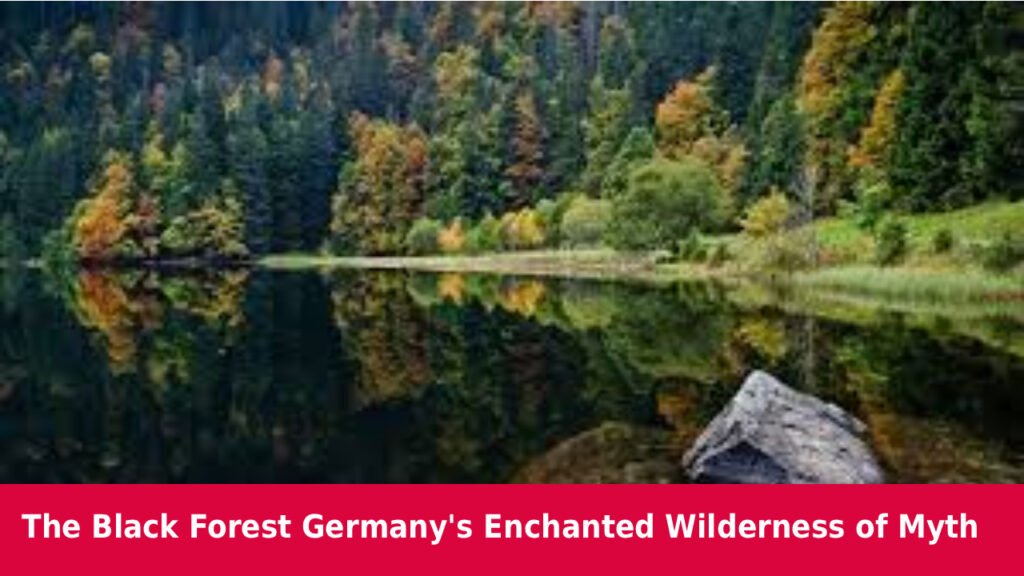
Nestled in the southwest corner of Germany in the state of Baden-Wurttemberg, the Black Forest, or Schwarzwald, is a place where reality seamlessly blends with folklore, creating a landscape so profoundly atmospheric it has captivated the world’s imagination for centuries. This vast mountainous region, stretching nearly 100 miles from the town of Pforzheim in the north to the Swiss border near Basel in the south, earns its evocative name from the dense canopy of fir and pine trees that grows so thickly it blocks out much of the sunlight, casting the forest floor into a perpetual, enchanting twilight. Far more than just a beautiful natural preserve, the Black Forest is the cradle of some of Germany’s most enduring legends, a hub of impeccable craftsmanship and culinary innovation, and a geological wonderland featuring Europe’s largest mineral hot springs. Its history is a rich tapestry woven from Celtic tribes, Roman conquests, medieval piety, and industrial ingenuity, all of which have left an indelible mark on the culture and the very soil of this unique region. To walk its winding paths is to step into the pages of a Grimm brothers’ fairy tale, where every mist-shrouded valley, every gnarled ancient tree, and every lonely farmhouse seems to hold a secret waiting to be discovered, making it one of Europe’s most compelling and multifaceted destinations.
The Black Forest is Deep Roots of Lore
The Black Forest is inextricably linked to the world of myth, serving as the primary inspiration for the Brothers Grimm, who collected many of their stories from the villages nestled within its dark borders. The region’s thick woods, deep lakes, and isolated communities provided the perfect setting for tales of enchantment and caution. The story of Little Red Riding Hood, with her iconic Rotkappchen, is said to be a warning to children about the very real dangers—both animal and human—that once lurked in these woods. Similarly, the macabre tale of the Pied Piper of Hamelin, while not set directly in the forest, draws from the medieval German fear of the unknown wilderness. But the most famous resident of the Schwarzwald is undoubtedly the cuckoo clock, whose origins are shrouded in a lesser-known tale of rivalry. While many assume it is an ancient invention, its design was actually standardized in the 18th century, and a fierce, often-overlooked historical battle erupted between German and Swiss clockmakers, each claiming the original design. This “Cuckoo Clock War” was eventually settled not in a courtroom but through a cunning marketing campaign that firmly cemented the Black Forest as its one true home, proving that even its most commercial symbols are rooted in fascinating, complex history.
The Black Forest is Secret Past
Beyond the fairy tales lies a history far stranger and darker than most tourists ever hear. During the Cold War, the Black Forest was not just a scenic retreat but a potential front line. NATO, along with the West German military, secretly constructed a vast network of underground bunkers and command centers buried deep within the mountains. These installations, designed to house government officials and military commanders in the event of a nuclear attack, were some of the most secretive and heavily fortified in Europe. Many have since been decommissioned, but their ghostly, empty corridors remain, a chilling monument to a tense era largely forgotten by the outside world. Even older are the region’s ties to ancient pagan rituals. In remote clearings, one can still find curious stone formations and altars that predate Christianization, sites where Celtic tribes like the Helvetii are believed to have performed ceremonies to appease forest spirits and gods. Local folklore speaks of the Moosweiblein, or “moss women”—ethereal, benevolent spirits who guarded the forest’s wildlife and were known to lead lost children to safety, a stark contrast to the more malevolent entities also said to reside there. This deep, layered history of secrecy and spirituality is what gives the Black Forest its palpable, mysterious energy.
A Culinary Journey Through the Schwarzwald
The Black Forest offers a feast for the palate as rich and deep as its landscapes, with a culinary identity known far beyond Germany’s borders. The world-famous Black Forest Gateau, or Schwarzwälder Kirschtorte, is the region’s most delicious ambassador. This decadent dessert of chocolate sponge cake, whipped cream, cherries, and a critical ingredient—Kirschwasser (a potent cherry schnapps)—is more than just a treat; it’s a direct reflection of its environment. Every component is sourced from the forest itself: the chocolate represents the dark woods, the cream the snow-capped peaks in winter, the cherries the abundant orchards, and the Kirschwasser the fiery spirit of the local people. Speaking of spirits, the production of Kirschwasser is a centuries-old tradition, with many small, family-owned distilleries, known as Brennereien, hidden throughout the valleys. They use traditional copper stills to transform local fruit into clear, potent brandies that are a point of immense local pride. Another little-known culinary gem is Schäufele, a slow-roasted pork shoulder with incredibly crispy skin, traditionally served on Sundays and at festivals. Perhaps the most unique and archaic dish is Schwarzwaldforelle (Black Forest trout), smoked over pine needles in the old style, which imparts a distinct, smoky flavor that cannot be replicated anywhere else on earth.
The Clockwork Soul of the Region
The reputation of the Black Forest for meticulous craftsmanship is globally renowned, centered primarily on its centuries-old clockmaking industry. This tradition began not in large factories, but as a cottage industry during the long, snowbound winters when farmers sought a way to supplement their income. Using wood from the forest and their innate mechanical ingenuity, they crafted timepieces that would become world-famous. The town of Furtwangen is home to the German Clock Museum, which houses a breathtaking collection of these intricate devices, from simple wooden shields to incredibly complex astronomical clocks. However, a lesser-known and equally fascinating craft is glassblowing. The forest provided the two essential ingredients for this art: vast quantities of wood to fuel the incredibly hot furnaces and quartz sand for the glass itself. The GlasstraBe, or “Glass Road,” winds through the forest, connecting historic glassblowing studios where artisans still practice techniques passed down through generations, creating everything from delicate Christmas ornaments to elegant stemware. This culture of precision extends to modern times, as the region is also a hub for high-tech medical and optical engineering, proving that the legacy of Black Forest craftsmanship is not confined to the past but is a living, evolving tradition.
Natural Wonders Beyond the Trees
While the woods are the main attraction, the Black Forest’s geological wonders are equally spectacular. The region sits on a massive geothermal hotspot, resulting in numerous mineral-rich thermal springs. The town of Baden-Baden, whose name literally means “Bathing-Bathing,” became the 19th century’s most glamorous spa destination, attracting European royalty, aristocracy, and literary figures like Queen Victoria, Fyodor Dostoevsky, and Mark Twain, who famously wrote about his time “taking the waters” in its opulent Roman-Irish Baths. But the highest waterfall in Germany is not the Rhine Falls, but the secluded Triberg Falls, a stunning seven-tiered cascade located deep within the forest. Another breathtaking natural landmark is the Mummelsee, a glacial lake shrouded in legend. It is said to be home to an underwater kingdom ruled by a Nix (water spirit) king, and folklore claims that on quiet nights, the bells of his sunken castle can be heard ringing from the depths. For the adventurous, the Feldberg mountain offers the highest peak in the range outside of the Alps, providing unparalleled hiking in the summer and skiing in the winter, showcasing the incredible diversity of the Black Forest landscape.
Modern Mysteries of The Black Forest
The enchantment of the Black Forest is not a relic of the past; it continues to evolve with modern mysteries that add to its allure. The region has become a noted hotspot for UFO sightings and strange atmospheric phenomena, with numerous reports of unusual lights and silent crafts maneuvering over its remote, dark skies, far from city light pollution. Furthermore, the forest is home to one of Germany’s most peculiar and debated natural phenomena: the Ratselhaftige Schnecken (Mysterious Snails). Periodically, and for reasons scientists cannot fully explain, millions of tiny snails will appear simultaneously, covering vast areas of forest floor, paths, and even trees in a living, crawling carpet before disappearing as suddenly as they arrived. While biologists point to specific climatic conditions, local legend offers a more supernatural explanation, viewing the event as an omen or a cleansing ritual performed by the forest itself. This coexistence of scientific inquiry and enduring superstition perfectly encapsulates the spirit of the Schwarzwald, a place where the rational and the magical are forever intertwined.
Experiencing the Enchantment
To truly experience the Black Forest is to move beyond the tour buses and immerse oneself in its rhythms. The best way to explore is by foot or by bicycle along the vast network of well-marked trails, such as the legendary Westweg long-distance path. Visitors should make a point to stay in a traditional guesthouse to experience genuine Gemutlichkeit (coziness) and sample home-cooked regional cuisine. For a truly unique and off-the-beaten-path experience, seek out the Vogtsbauernhof Open-Air Museum, which isn’t just a collection of buildings but a living history farm that demonstrates ancient farming techniques and traditional crafts that are still practiced in remote parts of the forest. Timing a visit to coincide with one of the many traditional festivals, like the vibrant Fasnacht (Carnival) with its terrifying wooden masks meant to scare away winter spirits, provides a deep cultural connection. Whether you’re hiking to a ruined castle, soaking in a thermal spa, listening to the echo of a cuckoo clock in a quiet workshop, or simply standing in a silent clearing under a canopy of ancient trees, the Black Forest offers a profound and unforgettable journey into the heart of Europe’s last great wilderness, where every step tells a story.
Go to main page

