The Genesis of a Global Call to Action: History of the Day
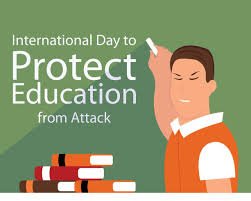
The International Day to Protect Education from Attack, observed annually on September 9th, is a relatively new but profoundly significant observance in the global humanitarian calendar. Its establishment is a direct response to a disturbing and escalating trend of violence against educational institutions, students, and educators in regions afflicted by conflict and instability. The day was formally proclaimed by the United Nations General Assembly in 2020, following a pioneering initiative led by the State of Qatar and endorsed by 62 co-signatory countries. This declaration was not created in a vacuum; it was the culmination of decades of documentation by organizations like UNICEF, UNESCO, and the Global Coalition to Protect Education from Attack (GCPEA), which painstakingly recorded thousands of attacks on schools every year. The day serves as the legal and moral embodiment of the Safe Schools Declaration, an inter-governmental political commitment that opened for endorsement in 2015. The historical context of this day is rooted in the brutal realities of modern warfare, where schools are not just collateral damage but are often strategically targeted to spread terror, dismantle social fabric, and deny a generation the knowledge and skills needed to rebuild their societies. It stands as a permanent international repudiation of the tactic of targeting education and a collective vow to uphold the right to learn as a fundamental pillar of human dignity and future peace.
Protect Education from Attack The Deep Resonance of the Day: More Than Just a Symbol
The meaning of this international day extends far beyond a symbolic gesture of solidarity; it is a stark reminder of a ongoing global crisis and a urgent call for concrete action. At its heart, the day champions the simple yet radical idea that classrooms should be sanctuaries of hope, not targets of war. Every attack on a school, university, student, or teacher is a multifaceted assault. It is, first, a gross violation of international humanitarian law and human rights, ripping away the right to education as enshrined in the Universal Declaration of Human Rights. Second, it is an attack on the future itself, deliberately crippling a community’s capacity to recover and perpetuating cycles of poverty, displacement, and radicalization. When a girl is prevented from going to school due to threats of violence, it is not just her education that is stolen; her future economic independence, health, and agency are compromised. For boys, forced recruitment often awaits in the vacuum left by shuttered schools. The day underscores that education is not a luxury to be provided after conflicts end but a critical lifeline that must be protected during emergencies. It is a shield, providing psychosocial support, a sense of normalcy, and the skills to navigate danger. Protecting education is, therefore, synonymous with protecting children, preserving stability, and investing in the only sustainable foundation for lasting peace.
From Awareness to Action: Unique Advocacy and Celebration Ideas
Celebrating this day requires moving beyond awareness to impactful advocacy and support. One powerful and unique idea is to organize a “Virtual Safe School” experience. Participants can join an online event where they hear pre-recorded audio clips of lessons being interrupted by the sounds of conflict, followed by silence, and then a testimony from a student who has lived through such an experience. This immersive, somber event can conclude with a guided discussion on the Safe Schools Declaration and a letter-writing campaign to elected officials. For schools in peaceful countries, students can engage in a “Shared Classroom” project. They can create art, poems, or videos expressing solidarity and hope, which are then shared via partner NGOs with students in conflict-affected areas, creating a powerful bridge of empathy and reminding them they are not forgotten. Communities can host a documentary screening followed by a “Teach-In” led by experts in international law or humanitarian workers who have firsthand experience protecting education in emergencies. Companies can leverage their influence by launching a “Skills for Protection” pro-bono initiative, where their legal, engineering, or cybersecurity teams partner with organizations like GCPEA to develop practical resources for protecting educational infrastructure, both physical and digital, from targeted attacks.
Crafting Wishes of Solidarity and Strength
Crafting messages for this day requires sensitivity, depth, and a focus on resilience and advocacy. A wish to a global audience could be: “May the sound of pens on paper forever drown out the sound of conflict. On this day, we stand in unwavering solidarity with every student and teacher who braves danger to pursue the light of learning. Your courage is the foundation of a more peaceful world.” For those working in the field: “To the guardians of hope in the darkest of places: your work is not in vain. Every lesson taught in defiance of fear is a victory. Today, we honor your immense bravery and renew our commitment to supporting your vital mission.” A message aimed at policymakers and the public: “Let us pledge that our legacy will not be one of empty classrooms and shattered futures. On this day, we are all advocates for safe schools. We are all protectors of the right to learn. We are all responsible for ensuring that education is a shield, not a target.”
Messages for Social Media and Public Campaigns
For broader reach, concise and powerful messages are key. “Books, not bullets. Schools, not silence. On the International Day to Protect Education from Attack, we speak up for every child whose classroom has been turned into a battlefield. #ProtectEducation #SafeSchools” “A child in a conflict zone should only fear a difficult exam, not an attack on their school. Today and every day, we must protect their right to learn in safety. #EducationUnderAttack” “Teachers are not targets. Education is not a weapon of war. Stand with us to safeguard the future. #ProtectEducation #RightToLearn” “Hope is a lesson that must never be canceled. Join the movement to protect education from attack. #SafeSchoolsDeclaration”
Voices of Authority: Quotes to Amplify the Cause
Powerful statements from global leaders can lend weight to advocacy efforts. United Nations Secretary-General António Guterres has stated, “Education is a fundamental human right and an essential driver for peace and development. Attacks on education are a violation of international humanitarian law and all too often, a violation of international human rights law.” UNESCO Director-General Audrey Azoulay emphasizes, “When education is attacked, it is the future of entire societies that is being targeted. We must protect education as a sanctuary, a space where knowledge, critical thinking, and tolerance are cultivated.” Activist and Nobel laureate Malala Yousafzai, who was herself a victim of an attack aimed at silencing her advocacy for girls’ education, famously said, “One child, one teacher, one book, one pen can change the world.” Sharing these quotes, contextualized with the day’s purpose, can powerfully frame the conversation.
The Unseen Scars: The Lasting Impact of Protect Education from Attack
The consequences of attacks on education ripple across generations long after the guns fall silent. Beyond the immediate physical destruction of infrastructure, the psychological trauma inflicted on students and teachers creates a pervasive “ecology of fear” that stifles learning and development. This trauma can manifest as anxiety, depression, and an inability to concentrate, severely hindering educational outcomes. Furthermore, the systematic destruction of education systems is a primary driver of displacement, as families flee areas where their children have no future. It also creates a devastating brain drain, as educated professionals, including teachers, are forced to seek safety elsewhere, depriving communities of the very expertise needed for recovery. The targeting of education is also deeply gendered; attacks on girls’ schools specifically are intended to enforce social regress and gender apartheid, setting back decades of progress on women’s rights. Understanding these long-term, multifaceted impacts is crucial for designing effective interventions that address not only physical protection but also psychosocial support, alternative learning pathways, and the rebuilding of entire educational ecosystems.
Protect Education from Attack is Our Collective Duty: Advocacy and the Path Forward
The International Day to Protect Education from Attack is ultimately a sobering reminder of our collective duty. The path forward requires sustained advocacy, robust funding for education in emergencies, and universal adherence to and implementation of the Safe Schools Declaration. Individuals can advocate by pressuring their governments to endorse and act upon the Declaration, support NGOs on the frontlines, and use their voices on social media to keep this issue visible. The private sector can invest in innovative solutions for remote learning in conflict zones and resilient educational infrastructure. The ultimate wish we can work towards is a world where such a day is no longer necessary, where every child, everywhere, can learn without fear. Until that day comes, our commitment must be unwavering: to protect the sanctuaries of learning, to champion the right to education, and to ensure that the pursuit of knowledge will always triumph over the forces of destruction.
Go to main page