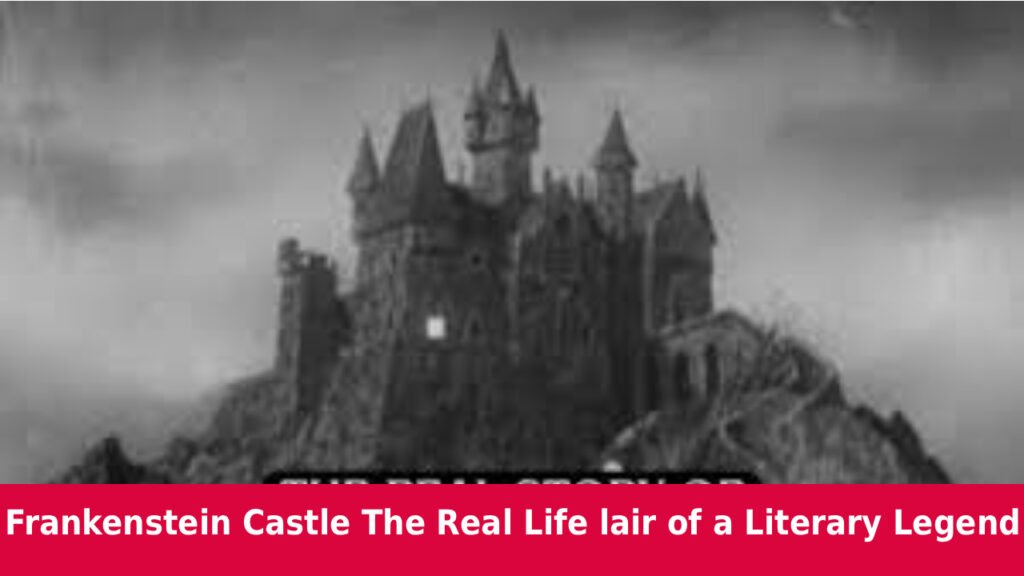
A Fortress of Two Tales
Perched ominously on a wooded hill overlooking the city of Darmstadt in Germany, the crumbling ruins of Frankenstein Castle (Burg Frankenstein) represent a rare and fascinating convergence of verified history and global literary legend. This is not a film set or a modern attraction built to capitalize on a famous name; it is a genuine, 13th-century fortress whose own dark history and local folklore are widely believed to have directly inspired a teenage Mary Shelley to create one of the most enduring monsters in fiction. The castle’s story is a dual narrative: one of a powerful medieval knightly dynasty that shaped the region, and another of a reclusive, controversial alchemist whose bizarre experiments sparked whispers of necromancy and provided the essential creative spark for a Gothic masterpiece. This unique blend of tangible history and undeniable mythic atmosphere makes a visit to Frankenstein Castle a journey into the very birthplace of modern horror, a place where the lines between fact and fiction are as blurred and intriguing as the mountain mists that so often shroud its broken battlements.
The Knights of Frankenstein Castle
Long before it was associated with a stitched-together monster, Frankenstein Castle was the seat of a formidable and influential noble family. The Lords of Frankenstein were first mentioned in historical records in the mid-13th century, with the castle itself likely founded around 1250 by Lord Conrad II Reiz von Breuberg, who then adopted the name “von Frankenstein.” The family was not merely a minor local nobility; they were knights, landholders, and diplomats who played a significant role in the regional politics of the Holy Roman Empire. Two centuries later, the family’s power was cemented when Sir Johann I von Frankenstein sold the castle and its lands to the Counts of Hesse-Darmstadt, but under a remarkable condition: the Frankenstein family would be allowed to continue living in the castle for the next 300 years, with the new lords covering all maintenance and repair costs. This shrewd deal ensured their legacy endured long after their official rule ended. The castle’s strategic location on a key medieval trade route allowed them to collect tolls and amass wealth, evidence of which can still be seen in the remnants of the formidable fortifications, including the deep defensive ditches and the sturdy keep that still stands today. The last Frankenstein lord died in 1662 without an heir, ending the direct male line, but the name and the stone legacy of their power remained, waiting for a new, more macabre story to take root.
The Alchemist in the Tower
The crucial historical figure who bridges the castle’s medieval history with its modern monstrous fame is Johann Conrad Dippel, a controversial theologian, physician, and alchemist who was born within the castle walls in 1673. Dippel lived a life so strange and scandalous that it inevitably spawned wild local legends. He was a brilliant but erratic man who developed a popular animal oil, known as “Dippel’s Oil,” which was purportedly made from bones, blood, and other bodily fluids and was touted as a universal medicine and even an elixir of life. He frequently experimented with nitroglycerin, leading to explosions that rattled the castle and terrified the local populace. Most intriguingly, he was obsessed with the concept of transferring the soul from one body to another and was rumored to have conducted gruesome experiments on exhumed corpses in a bid to achieve immortality. It was these rumors—of a mad scientist digging up bodies and tinkering with the very essence of life in a remote castle laboratory—that permeated the local consciousness. A century later, these tales were still circulating when a young Mary Wollstonecraft Godwin (later Shelley) toured the Rhine region with Percy Bysshe Shelley in 1814. While there is no definitive proof she heard the stories, the circumstantial evidence is powerful: she mentioned the castle in her travel journals, and the route of her tour passed directly through the Darmstadt area, a known hub for Gothic tales. The image of Dippel, the real-life “mad scientist” of Frankenstein Castle, is the most compelling candidate for the inspiration behind Victor Frankenstein.
Mary Shelley’s Rhine Journey
The connection between a remote German castle and an English author’s literary breakthrough is one of history’s most fascinating cultural accidents. In 1814, the 16-year-old Mary and her future husband, the poet Percy Shelley, embarked on a journey through Europe, traveling along the River Rhine. This region was not only scenically stunning but also a treasure trove of German folklore, Gothic ruins, and ghost stories, which the Shelleys avidly consumed. Mary’s own journal entries confirm they passed through Darmstadt, the very territory dominated by the castle on the hill. While she never explicitly wrote, “I visited the castle,” the timing and location are highly suggestive. The Shelleys were known to engage local guides who would have been eager to share the most thrilling local legend: that of the alchemist Dippel and his unholy experiments. This journey occurred just two years before the famous 1816 gathering at Villa Diodati in Switzerland where, challenged to write a ghost story, Mary conceived the nightmare that would become Frankenstein; or, The Modern Prometheus. It is incredibly plausible that the seed planted during her Rhine journey—the image of a castle where a man played God—blossomed into her timeless tale of creation and consequence.
Frankenstein Castle is Architectural Evolution
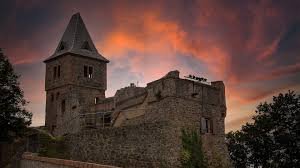
The physical structure of Frankenstein Castle tells its own story of rise, decline, and romantic decay. The castle was built in several distinct phases, beginning as a typical Staufer-era fortress with a central keep (bergfried) and a palas (great hall). Over the centuries, it was expanded and modified to withstand evolving siege technology, gaining formidable rings of walls, bastions, and deeper moats. However, its strategic importance waned after the Thirty Years’ War, and it began a long, slow decline into ruin. By the 18th century, it was largely abandoned, its stones sometimes quarried for local building projects. This state of romantic decay is precisely what attracted 19th-century artists and writers of the Romantic movement, who saw beauty in such crumbling relics of the past. The castle’s current appearance is largely the result of restoration efforts by the Grand Duchy of Hesse-Darmstadt in the mid-19th century, which stabilized the ruins to prevent further collapse and make them safe for visitors. They intentionally preserved its ruined state, understanding that the aura of age and mystery was its greatest asset. Today, visitors can walk through the remnants of the lower and upper castles, climb the keep for panoramic views, and explore the chapel site, all while feeling the palpable weight of centuries of history and storytelling.
The American Military Connection
A fascinating and little-known chapter in the castle’s modern history involves the United States military. From the end of World War II until 2008, the surrounding area was home to a significant US Army presence, with the Coleman Barracks in Mannheim and other installations nearby. In the 1970s, American soldiers and their families, seeking a way to celebrate Halloween authentically while stationed abroad, discovered the perfectly named and atmospheric Frankenstein Castle. They began organizing small Halloween parties there. This annual gathering grew exponentially over the decades, evolving into one of Europe’s largest and most famous Halloween festivals, attracting tens of thousands of visitors each year. For nearly 40 years, the castle’s courtyards and ruins were transformed into a spectacular scene of haunted houses, theatrical performances, and costumed revelry. This American import ironically reignited global interest in the castle and solidified its identity as the “home of Halloween” in Germany. Although the official large-scale festival ended in 2018, the castle still hosts smaller, more traditional Halloween events, a lasting legacy of the US military’s presence and their clever fusion of a German landmark with an American holiday.
Beyond the Monster of The Frankenstein Castle
While the Frankenstein story is its main draw, the castle grounds are rich with other, lesser-known legends and mysteries. The site is believed to have been a sacred place long before the castle was built, possibly used for pagan rituals by the Celts and other pre-Christian tribes. This has made it a focal point for various esoteric and neo-pagan groups. Another persistent legend involves a dragon-slayer knight; a tombstone within the nearby chapel ruins is said to mark the grave of a knight who defeated a dragon that terrorized the valley, and some versions of the tale claim the knight was a Frankenstein. Furthermore, the castle is a purported hotspot for paranormal activity. Visitors and investigators have reported numerous strange occurrences, from sudden temperature drops and feelings of being watched to electronic voice phenomena (EVP) and unexplained figures photographed in the mist. These reports span centuries, suggesting that the castle’s reputation as a place of strange energy predates even the story of Dippel, adding yet another layer of mystery to this already complex landmark.
Visiting the Castle for the Modern Pilgrim
For those seeking to walk in the footsteps of both knights and literary giants, a visit to Frankenstein Castle is a rewarding experience. The castle is easily accessible via a well-signposted hiking trail from the Darmstadt-Eberstadt train station or by car, with a parking lot located a short walk from the ruins. Admission to the castle grounds is free, allowing visitors to explore the ruins at their own pace. The on-site restaurant, housed in a building incorporated into the old walls, offers traditional German food and drink with a spectacular terrace view. The best times to visit are during the spring and autumn, when the fog often rolls in, enhancing the eerie atmosphere, or during the Advent season when a small Christmas market brings a different kind of magic to the old stones. While the massive Halloween festival is gone, the castle’s connection to the holiday ensures it remains a particularly popular destination in late October. A visit today is a multi-layered experience: one can appreciate the genuine history of a medieval fortress, ponder the possible inspiration for a literary classic, enjoy stunning views of the Rhine Valley, and feel the chill of countless spooky stories—all in one unforgettable location.
Go to main page

