A Reign of Terror in the Margeride Mountains
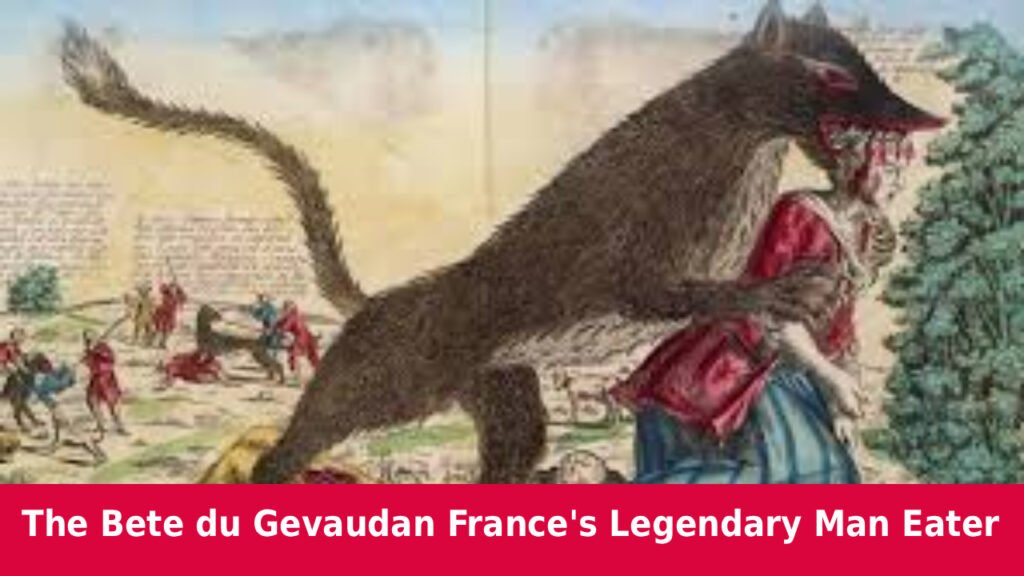
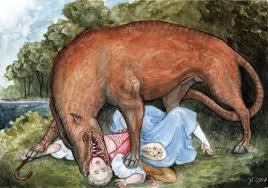
Between 1764 and 1767, the remote and impoverished province of Gevaudan in south-central France, now modern-day Lozere, was gripped by a terror so profound it captured the attention of a king and remains Europe’s most infamous wolf-based legend. This was the reign of the Bete du Gevaudan, the Beast of Gevaudan, a creature whose savagery was so extreme and methods so bizarre that it was believed to be no ordinary wolf. Described as a monstrous canine the size of a calf with a massive chest, a wolf-like head featuring terrifyingly long teeth, a reddish fur streaked with black, and a dark stripe running down its back, the Beast exclusively targeted humans, often in broad daylight. It was a cunning and methodical predator, known for its apparent immunity to bullets and a disturbing preference for decapitation. It would often ignore livestock and armed men to go after the most vulnerable members of society: women, shepherdesses, and, most horrifyingly, children. Over approximately three years, it was credited with over 300 attacks, resulting in an estimated 100 to 130 deaths and numerous gruesome injuries, creating a panic that paralyzed the region and forced a desperate populace to see the devil himself in the shadows of the Margeride Mountains.
A Creature of The Bete du Gevaudan
What set the Beast apart from any documented case of wolf predation was its utterly bizarre and seemingly intelligent behavior, which fueled theories that it was anything but a natural animal. Survivors’ accounts and the state of the victims’ bodies painted a picture of a calculated and almost sadistic killer. The Beast was known to toy with its prey, attacking and then releasing individuals multiple times in a single encounter. It displayed an uncanny ability to evade traps and hunts, seeming to anticipate the movements of its pursuers. Most chilling was its signature method of attack: it frequently decapitated its victims and often carried the heads away, which were rarely recovered. This was not typical behavior for a wolf seeking food; it was the behavior of a creature that killed for sport or for a more sinister purpose. Numerous victims were found with their throats torn out, a hallmark of the attacks. This pattern of violence, combined with its stated physical description, led the deeply religious and superstitious peasantry to conclude they were being hunted by a loup-garou (werewolf), a demon sent by God as punishment, or a sorcerer’s familiar. The fear was so pervasive that children were kept from school, farmers refused to work in isolated fields, and entire villages would ring church bells at the sight of any large animal, a signal for people to barricade indoors.
The King’s Response Dragons and Professional Hunters
The scale of the terror eventually broke through the isolation of Gevaudan and reached the court of King Louis XV in Versailles. The constant reports of deaths, particularly of children, and the growing public outcry became an embarrassment to the crown. The King, who enjoyed hunting wolves as a sport, initially dismissed the reports as peasant hysteria exaggerated by a sensationalist press. However, as the body count rose and the story spread throughout Europe, tarnishing the image of France, he was forced to act. He first dispatched professional wolf hunters and then, in a significant escalation, sent a detachment of his own Dragoons, the elite light cavalry led by Captain Jean-Baptiste Duhamel. Duhamel and his soldiers organized massive, military-style beats, involving thousands of local peasants corralling the countryside. Despite their efforts, the Beast always seemed to vanish. The King then offered a massive reward, equivalent to a fortune for the time, which attracted a stream of aristocrats, bounty hunters, and charlatans from across the continent, all hoping to claim the prize and glory. This influx of outsiders turned the Gevaudan countryside into a chaotic and armed camp, yet the Beast continued its attacks, seemingly mocking the efforts of the King’s own men.
The Untold Story of the Denneval Family
Overshadowed by the later success of Francois Antoine, the story of Jean Charles Marc Antoine Vaumesle de Enneval and his son Jean-François is a fascinating and often overlooked chapter in the saga. The de Ennevals were Normandy’s most famous wolf-hunting aristocrats, summoned by the King himself in February 1765 to succeed where the military had failed. Confident and charismatic, they brought a pack of specialized hunting hounds and a wealth of experience. However, their methods, which were effective on the well-managed estates of the north, failed in the rugged, vast wilderness of the Margeride. They dismissed local knowledge and the descriptions of the Beast, insisting they were hunting a large, but ordinary, wolf. For nearly six months, they pursued leads without success, their failure eroding public confidence and deepening the despair of the local population. Their tenure highlights the cultural clash between the sophisticated, rationalist outsiders from the court and the terrified, superstitious locals who believed they were facing a supernatural evil. The de Ennevals’ eventual recall was a humiliation that demonstrated the Beast was a problem beyond conventional solution.
The Kill and the Enduring Controversy
The official end of the reign of terror came on June 19, 1767, when a local innkeeper and noted hunter named Jean Chastel confronted and shot a massive wolf in the forests of the Sogne de Auvers. The story, heavily romanticized, claims Chastel used a silver bullet he had crafted from a melted-down crucifix, and that the Beast, upon seeing him, calmly sat and waited to be shot—a detail that firmly places the event in the realm of legend. The wolf he killed, known as the “Wolf of Chastel,” was enormous and fit the general description. Its body was paraded through the region to immense relief before being sent to Versailles. However, the court naturalists were unimpressed, identifying it as a large, but unremarkable, wolf. Crucially, the attacks stopped. Yet, the controversy was born. Many historians and cryptozoologists point out that the Wolf of Chastel was not the first beast killed. In September 1765, the King’s own gun-bearer, François Antoine, had shot a massive “Wolf of Chazes,” which was officially declared the Beast, stuffed, and sent to the court. Attacks initially ceased, only to restart months later, proving Antoine had killed *a* beast, but not the Beast. This has led to the persistent theory that there was not one monster, but a pair, or even a pack, of unusually large and aggressive wolves, possibly hybrids or animals trained to attack humans.
The Bete du Gevaudan has Modern Theories
In the absence of definitive proof, the mystery of The Bete du Gevaudan Beast’s true nature has only grown, spawning a plethora of modern theories that range from the plausible to the outlandish. The most accepted zoological theory is that it was a large, healthy male wolf or a wolf-dog hybrid, perhaps suffering from a disease like rabies that could explain its aberrant behavior, though rabies does not account for the long time frame or the deliberate decapitations. Another popular theory suggests it was an escaped exotic animal, such a striped hyena or a lioness, whose description loosely matches some contemporary accounts. More darkly, several researchers have proposed a human element: that the Beast was a cover for a serial killer or a sadistic aristocrat. This theory posits that the attacks were the work of a person, possibly using trained attack dogs, and the animalistic descriptions were a smokescreen for murder. The most grisly version of this theory involves a nobleman, the Comte de Morangies, a known psychopath who lived in the area and was known to hunt with large, mastiff-like dogs. The truth is likely a combination of factors: a perfect storm of a large predator, a landscape rich in vulnerable prey, and a population primed by poverty and superstition to believe in a monster.
The Bete du Gevaudan Today
The memory of The Bete du Gevaudan Beast is indelibly etched into the identity of the modern department of Lozere. The region has fully embraced its infamous legend, transforming a historical trauma into a key part of its cultural heritage and tourism industry. The town of Saugues serves as the unofficial capital of the Beast’s territory, home to the fascinating Musee Fantastique de la Bete du Gevaudan, which uses life-sized animatronics to tell the story. In the nearby village of Auvers, a stone cross marks the spot where Jean Chastel allegedly slew the creature. Throughout the region, statues, plaques, and place names commemorate victims and key events. The rugged, beautiful landscape of the Margeride Mountains, with its deep forests and vast granite plateaus, remains largely unchanged from the 18th century. Hiking trails now lead visitors through the very areas where the Beast once hunted, allowing them to feel the isolation and wild beauty that fostered such a potent legend. The story is a cornerstone of local identity, a dark fairy tale that is told and retold, ensuring that The Bete du Gevaudan, whatever it was, will never truly die.
The Eternal Beast From Historical Tragedy
The story of The Bete du Gevaudan has transcended its historical roots to become a global cultural phenomenon, a archetypal monster narrative that continues to inspire art, literature, and film. It has been the subject of numerous books, both historical and fictional, and has been featured in several films, most notably the 2001 French horror film Brotherhood of the Wolf , which blended martial arts, horror, and political conspiracy into a wildly popular, if highly inaccurate, retelling. The Beast appears in video games, comic books, and television series, often as a quintessential werewolf or a monstrous wolf. Its legacy is that of the ultimate “killer beast,” a precursor to every story of a mysterious predator stalking a isolated community. The historical tragedy of the real deaths has been transformed into myth, but the power of the story endures because it taps into a primal fear: the fear of the wild, the unknown, and the monster that waits just beyond the safety of the village lights.
Go to main page