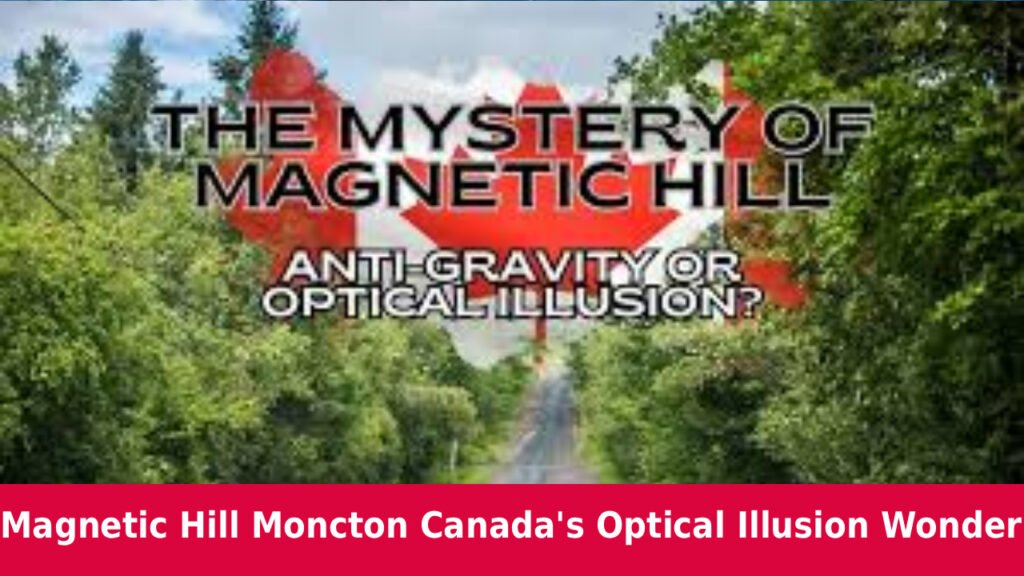
In the vibrant city of Moncton, New Brunswick, a gateway to Canada’s magnificent Maritime provinces, lies one of the nation’s most beloved and perplexing roadside attractions: Magnetic Hill. For nearly a century, this unassuming stretch of road has been astonishing visitors by defying the most basic laws of physics, creating the undeniable and eerie sensation that a car left in neutral will begin to roll uphill, pulled by some unseen force. This world-famous optical illusion has become the cornerstone of Moncton’s identity, so much so that the city proudly bears the nickname “The Magnetic Hill City.” What began as a local curiosity recounted in hushed tones has blossomed into a full-fledged tourist destination, complete with a zoo, a winery, and a whirl of commercial activity. Yet, at its heart, the core experience remains a simple, mind-bending trick of the senses that continues to captivate families, scientists, and skeptics alike. The story of Magnetic Hill is a fascinating tale of folklore, entrepreneurial spirit, scientific inquiry, and the powerful human desire to believe in the extraordinary, all set against the backdrop of a simple hill that isn’t at all what it appears to be.
The Discovery: From Horse and Wagon to Automotive Wonder
The exact origins of Magnetic Hill Moncton is discovery are shrouded in the pleasant haze of local lore, with several competing tales adding to its charm. The most popular and enduring legend dates back to the horse-and-buggy era of the late 19th century. As the story goes, a local farmer was driving his wagon loaded with goods up what he believed to be a Magnetic Hill Moncton. When he stopped to rest his horse at a specific spot, he was shocked to find that his wagon, despite the brake being set, began to roll backwards, seemingly uphill. Terrified by what he perceived as a supernatural event, he reportedly fled the scene. Another version suggests that a motorist whose car had stalled was similarly astonished when his vehicle began to coast backward against the perceived incline. For decades, these stories circulated as a local secret, a strange geographic anomaly known mostly to Moncton residents who would take unsuspecting visitors for a thrill. It wasn’t until the rise of the automobile and the advent of paved roads in the 1930s that the phenomenon gained wider attention, transforming from a rural oddity into a must-see attraction for a newly mobile continent.
The Golden Age Showmen, Signage, and National Fame
The true catalyst for Magnetic Hill Moncton is ascent into the national consciousness was a savvy businessman named R.W. Bishop. In the early 1950s, recognizing the immense commercial potential of the optical illusion, Bishop purchased the surrounding land. He was the first to formally commercialize the experience, putting up prominent signs and creating a dedicated, controlled area for visitors to perform the “test.” His vision was to transform a confusing stretch of rural road into a user-friendly destination. This period marked the beginning of Magnetic Hill Moncton is “Golden Age.” As post-war families took to the highways for cross-country adventures, roadside attractions became a major part of North American travel culture. Magnetic Hill, perfectly situated on the Trans-Canada Highway, was poised to become a premier stop. Word of mouth spread like wildfire, fueled by postcards and travel guides that proclaimed the marvel of the “hill that defies gravity.” The attraction’s fame was further cemented when it was featured on national television programs and in newspaper articles, often presented as an unsolved mystery. This era established the now-universal ritual: drivers proceeding to the designated white post, putting their car in neutral, releasing the brake, and gasping as their vehicle seemingly glides uphill, a moment of pure, delightful disbelief that has been repeated millions of times.
The Science of the Slope: Demystifying the Optical Illusion
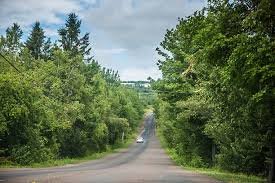
While many early visitors left convinced they had experienced a paranormal event or a localized gravitational anomaly, the truth behind Magnetic Hill is a brilliant and perfectly natural trick of human perception. The phenomenon is not caused by magnetism or gravity, but by a complete misreading of the local topography. The area surrounding Magnetic Hill is not a single incline but a complex landscape of subtle slopes. The key to the illusion lies in the horizon line. To accurately judge the slope of a hill, the human brain relies on a visible, true horizon. At Magnetic Hill, the actual horizon is obscured by trees, hills, and other natural features. What the brain perceives as the “horizon” is actually a false horizon created by the surrounding landscape, which is on a sharper incline than the road itself. This creates a powerful forced perspective. The road you are on is, in fact, a very slight downhill slope. However, because the surrounding terrain slopes downward at an even steeper angle, your brain is tricked into interpreting the milder downhill you are on as an uphill slope. Therefore, when you put your car in neutral, it is simply obeying the true law of gravity and rolling gently downhill. The illusion is so convincing because the visual cues your brain depends on are lying to you. It is a masterclass in how our senses can be deceived by our environment.
The Magnetic Hill Zoo: From Illusion to Family Institution
As the fame of the optical illusion grew, the surrounding area began to develop to capture the valuable tourist traffic. The most significant and beloved addition was the Magnetic Hill Zoo. What began as a modest children’s farm in the 1950s has since evolved into the largest zoo in Atlantic Canada, a world-class institution that has far outgrown its origins as a side attraction. The zoo is now a major destination in its own right, home to over 700 animals representing more than 100 species, from majestic lions and giraffes to native Canadian wildlife. Its growth mirrors the evolution of family tourism, shifting from simple curiosities to educational and conservation-focused experiences. For many families, a trip to Magnetic Hill is no longer just about the five-minute optical illusion; it is a full-day affair centered on the zoo. This development has ensured the area’s continued relevance, attracting visitors who come for the animals but inevitably stay to experience the famous hill, creating a powerful symbiotic relationship between the natural illusion and the cultivated attraction. The zoo’s success story is a crucial, though often overlooked, chapter in the hill’s history, demonstrating how a single natural wonder can act as an anchor for broader economic and recreational development.
The Wharf and the Winery: Expanding the Magnetic Brand
The commercial ecosystem around Magnetic Hill continued to expand with the same entrepreneurial spirit that launched it. The Magnetic Hill Wharf is a more recent addition, a charming boardwalk-style complex that features a variety of shops, restaurants, and entertainment venues. It offers a place for visitors to relax, dine, and shop for souvenirs after their encounter with the hill. Similarly, the Magnetic Hill Winery leverages the area’s famous name to attract oenophiles and curious tourists, offering wine tastings and tours. These developments show a conscious effort to brand the entire area under the “Magnetic Hill” moniker, transforming it from a single point of interest into a comprehensive tourist district. This strategy has been incredibly successful, ensuring that the economic benefits of the original illusion are maximized and that visitors have multiple reasons to extend their stay in Moncton. The name itself has become a valuable trademark, a symbol of unique family fun that is applied to a variety of ventures far removed from the original gravity-defying experience.
A Global Phenomenon: Gravity Hills Around the World
A little-known fact is that Moncton’s Magnetic Hill is not unique. Similar optical illusions, often called “gravity hills,” “mystery spots,” or “magnetic hills,” exist all over the world. From Confusion Hill in California to the Electric Brae in Scotland, these sites all operate on the same principle: a cleverly disguised downhill slope that appears to be an uphill one due to a obscured or misleading horizon. What sets Moncton’s version apart is its scale, accessibility, and masterful commercialization. While many global gravity hills are found on remote backroads and are known only to locals, Magnetic Hill in Moncton is a professionally managed, prominently signed, and easily accessible attraction. It has been packaged and promoted with a professionalism that others lack, earning it a reputation as the quintessential example of the phenomenon. For many Canadians and international tourists, it is the only gravity hill they will ever visit, making it the standard-bearer for this specific type of illusion and contributing significantly to its legendary status.
The Enduring Appeal: Why We Love to Be Fooled
The lasting power of Magnetic Hill, beyond the commercial developments, lies in a simple human truth: we delight in having our senses deceived in a safe and controlled environment. The experience provides a momentary rupture in our understanding of the world, a fleeting sense of wonder that is increasingly rare in our explained and digitized age. For children, it is pure magic. For adults, it is a fascinating demonstration of the fallibility of their own perception. The ritual is simple, safe, and universally accessible—no special equipment or physical ability is required. It creates a shared moment of astonishment and joy within a car, a collective “Wow!” that becomes a cherished family memory. This emotional resonance is the true engine of Magnetic Hill’s decades-long success. It taps into the same appeal as a magic trick: the joy is not ruined by knowing how it’s done; in fact, understanding the complex science behind the simple illusion can make it even more impressive. It is a testament to the clever design of our natural world and the fascinating quirks of human psychology.
More Than a Hill: Moncton’s Magnetic Identity
Today, Magnetic Hill is far more than just an optical illusion; it is an integral part of Moncton’s civic identity and economic fabric. The “Magnetic Hill” name is ubiquitous in the city, applied to everything from the sprawling concert venue (Magnetic Hill Concert Site, which hosts massive international acts) to residential subdivisions and local businesses. The original attraction continues to draw hundreds of thousands of visitors each year, serving as a primary driver for the local tourism industry. Its story is a case study in how to successfully leverage a natural curiosity into sustained economic prosperity. From its humble beginnings as a spooky local legend to its current status as a multi-faceted tourist hub, Magnetic Hill has proven its magnetic pull is not just an illusion of physics, but a very real force in the culture and economy of New Brunswick. It stands as a enduring symbol of wonder, a reminder that sometimes the most incredible journeys are not to far-off lands, but to a place where a simple shift in perspective can make the impossible seem real.
Go to main page

