The Hidden Nexus of Wolf’s Lair
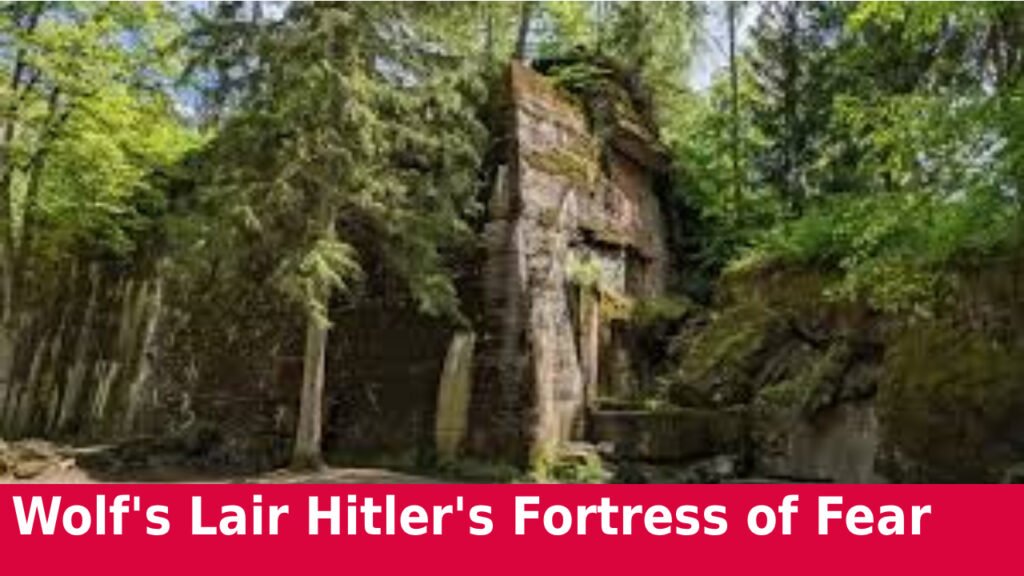
Deep within the damp, mosquito-ridden forests of Masuria, in what was then East Prussia and is now modern-day Poland, lies one of the most sinister and consequential historical sites of the 20th century: the Wolf’s Lair, or Wolfs schanze. This sprawling, heavily camouflaged complex was not a mere military outpost but the primary headquarters of Adolf Hitler for over 800 days during the most brutal phase of World War II on the Eastern Front. From these concrete bunkers, shrouded by towering pines and an elaborate veil of secrecy, the Führer and his inner circle directed the invasion of the Soviet Union, orchestrated the horrors of the Holocaust, and managed the vast machinery of the Nazi war effort. The choice of location was strategic genius; the nearby borders and robust railway network allowed for control over the entire front, while the treacherous marshlands and dense woodland provided a natural defensive barrier, making the complex virtually invisible from the air and incredibly difficult to approach on foot. It was here, in this isolated and paranoid environment, that some of the war’s most fateful decisions were made, and here that the most famous attempt on Hitler’s life very nearly changed the course of history.
A City of Concrete and Paranoia
The construction of the Wolf’s Lair began in the autumn of 1940 under the utmost secrecy, managed by the Organisation Todt, the Nazi’s engineering and labor corps. The scale was staggering. By the time it was occupied in the summer of 1941, it had grown into a small, self-sufficient city covering over 6.5 square kilometers, containing approximately 200 structures including massive bunkers, barracks, two airfields, a power station, a railway station, heating plants, and water towers. The most critical buildings were the gargantuan reinforced concrete bunkers, each with walls and roofs up to eight meters thick, designed to withstand direct hits from the largest aerial bombs of the era. Hitler’s personal bunker was a labyrinth of sparse rooms, with a central conference barrack where daily military situation meetings were held. The entire complex was protected by multiple perimeter security zones: a minefield containing over 50,000 mines, barbed wire fences, machine-gun nests, and checkpoints manned by the fanatically loyal SS Leibstandarte guard. Access was granted only to those with special passes, and even high-ranking generals were required to surrender their firearms upon entry. This atmosphere of intense suspicion and isolation bred a unique and claustrophobic society, cut off from the outside world and entirely devoted to the will of one man.
The Unseen Daily Life Within the Bunker Walls
Beyond the maps and military strategies, life inside the Wolf’s Lair was a strange and surreal experience for its inhabitants, a detail often lost in the broader historical narrative. The constant hum of generators, the smell of damp concrete and pine needles, and the ever-present swarms of mosquitoes in the summer months created a uniquely oppressive environment. Hitler himself, a vegetarian and hypochondriac, lived a bizarrely regimented life, with meals consisting of simple soups and mashed potatoes, often tested for poison by his personal food taster. His beloved German Shepherd, Blondi, was a constant companion. The inner circle, including figures like Martin Bormann, Hermann Göring, and Wilhelm Keitel, resided in their own fortified bunkers, and the complex even hosted foreign dignitaries like Benito Mussolini. A little-known fact is the presence of a tea house and a small cinema where propaganda films were screened, pathetic attempts at normalcy in a compound defined by its militaristic purpose. The immense psychological pressure and isolation took a toll on everyone; Hitler’s health declined noticeably, his physical tremors and erratic behavior becoming more pronounced as the war turned against Germany, his world shrinking to the confines of this fortified forest prison.
Operation Valkyrie The Day the Earth Shook
The most defining event in the history of the Wolf’s Lair, and the one for which it is most famous, occurred on July 20, 1944. This was the day Colonel Claus Schenk Graf von Stauffenberg, a disillusioned aristocrat and army officer, carried a briefcase containing a powerful British plastic explosive into the heart of the daily situation conference. The plot, codenamed Operation Valkyrie, was the culmination of years of planning by a loose network of German military officers, diplomats, and civilians who sought to assassinate Hitler and negotiate a peace with the Allies to save Germany from total destruction. The story of the bomb itself is filled with chilling minutiae; Stauffenberg, having lost an eye, a hand, and fingers on his other hand in combat, used a pair of specially adapted tweezers to crush the acid capsule that would initiate the detonator. Due to the stifling summer heat, the conference was moved from the reinforced concrete bunker to a wooden barrack with large, open windows—a crucial change that would dramatically alter the outcome. Stauffenberg placed the briefcase under the heavy oak table, mere feet from Hitler, and excused himself. The bomb detonated at 12:42 PM, obliterating the building and sending a plume of black smoke into the sky. The plotters in Berlin, believing Hitler was dead, immediately initiated their coup. But Hitler had survived.
A Twist of Fate: The Table Leg That Saved a Tyrant
The reason for Hitler’s survival is a story of almost unbelievable chance and a series of tiny, fateful decisions. The move to the flimsier conference barrack was the first factor; had the blast been contained within a concrete bunker, the concussion would have been fatal to all inside. Secondly, the briefcase was inadvertently moved by another officer, Colonel Heinz Brandt, who found it obstructing his feet. He pushed it behind the massive, two-legged oak table support. This heavy oak beam acted as a blast shield, deflecting the force of the explosion directly away from Hitler. The Führer was shielded by the very table leg that would have been his undoing in the bunker. He emerged from the wreckage alive, suffering from a perforated eardrum, minor burns, and shredded trousers, but very much alive. The immediate aftermath was a scene of surreal horror. The explosion was so powerful it blew out the windows and doors and set the building ablaze. One high-ranking officer died instantly, three others succumbed to their wounds later, and everyone present was injured and deafened. In the confusion, Stauffenberg and his aide-de-camp, convinced the plot had succeeded, bluffed their way through the checkpoints and flew back to Berlin, unaware that their failure had already been communicated and that a night of vengeance was beginning.
The Vengeful Aftermath of Wolf’s Lair
Hitler’s survival unleashed a wave of vengeful paranoia that swept across Germany. That very evening, he gave a radio address to prove he was alive, and the SS and Gestapo began a ruthless and bloody purge of anyone connected to the plot. The plotters in Berlin, including Stauffenberg, were summarily executed by firing squad in the courtyard of the Bendlerblock that very night. What followed was a show trial spectacle presided over by the infamous Judge Roland Freisler, resulting in the gruesome executions of thousands of suspects, many of whom were hung with piano wire from meat hooks in Plötzensee Prison, a process filmed for Hitler’s personal viewing. The net widened far beyond the military, ensnaring aristocrats, pastors, and civilians. Back at the Wolf’s Lair, the event only deepened the atmosphere of dread and suspicion. Security was tightened to an even more extreme degree. By late 1944, with the Soviet Red Army advancing rapidly, the decision was made to abandon the headquarters. On January 24, 1945, the complex that had taken years and immense resources to build was ordered to be destroyed. German engineers spent days laying explosive charges to ensure nothing of value would fall into enemy hands. The resulting detonations were so colossal that they shattered the massive reinforced concrete structures, creating the haunting landscape of broken monoliths that visitors see today.
Wolf’s Lair Today A Monument to Moral Courage
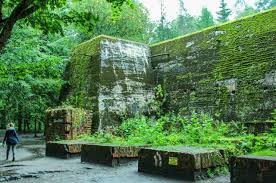
Today, the Wolf’s Lair is a powerful and somber tourist site, a place of pilgrimage for those seeking to understand the complexities of history. The ruins, left largely as they were after the demolitions, are being slowly reclaimed by nature. Moss and ivy creep over the colossal chunks of collapsed concrete, and trees grow from the rubble, creating an eerily beautiful and contemplative atmosphere. It serves as a monument with two faces: one is a stark reminder of the immense evil that was conceived and directed from this place; the other is a powerful tribute to the courage of the German resistance, the men and women who risked everything to try and stop that evil. A simple stone monument now stands near the site of the explosion, dedicated to Colonel von Stauffenberg and his fellow conspirators. Guided tours lead visitors through the maze of ruins, pointing out the locations of Hitler’s bunker, Goring’s headquarters, and the crater left by Stauffenberg’s bomb. The site does not glorify its past but forces a confrontation with it, asking difficult questions about duty, resistance, and the banality of evil.
Echoes in the Forest The Enduring Legacy
The legacy of the Wolf’s Lair extends far beyond its physical remains. It has become a potent symbol in literature, film, and historical study. The story of the July 20 plot has been the subject of numerous movies, most notably the 2008 film “Valkyrie” starring Tom Cruise, which brought the tale to a global audience. For historians, the site remains a critical focal point for understanding the inner workings of the Nazi regime, the logistics of total war, and the psychology of its leaders. For Poland, it is a complex part of its national heritage, a relic of a brutal occupation that is now managed with sensitivity and a commitment to education. The Wolf’s Lair stands not as a monument to the dictator who built it, but as a testament to his ultimate failure and to the fragility of tyranny. It is a place where the echoes of a bomb blast remind us that even in the deepest darkness, there were those who dared to strike a match, and whose courage continues to resonate through the silent, broken corridors of the forest.
Go to main page

