Externsteine A Geological Anomaly
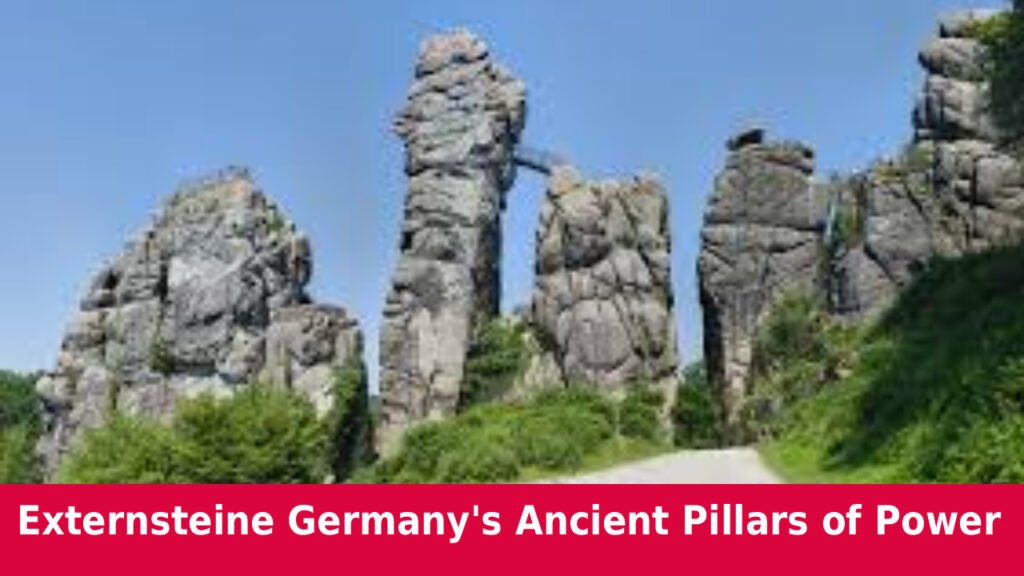
Rising with dramatic and almost unnatural abruptness from the gentle, forested landscape of the Teutoburg Forest in North Rhine-Westphalia, Germany, the Externsteine is a formation of thirteen towering sandstone pillars that has served as a focal point of human awe, worship, and speculation for millennia. This site, often dubbed “Germany’s Stonehenge,” possesses an energy and a history so dense and contested that it feels palpably different from its surroundings, a sacred nexus where the threads of geology, archaeology, religion, and mythology are inextricably tangled. The pillars themselves, weathered into fantastical shapes by wind and water over millions of years, contain within their hollowed interiors a stunning array of man-made alterations: a rock-hewn chapel perched precariously near a summit, an intricately carved monumental relief dating back to the early Middle Ages, ancient staircases leading to altars, and mysterious niches and chambers whose original purposes have been lost to time. From a potential pagan sanctuary for the Saxon worship of the Irminsul to a Christian hermitage, from a Nazi cult site to a modern-day magnet for neo-pagans and astronomers, the Externsteine’s true story is a complex palimpsest, with each era etching its own beliefs and controversies onto the ancient stone, making it one of Central Europe’s most enigmatic and spiritually charged locations.
Externsteine The Stone Titans
The very existence of the Externsteine is a geological marvel. These towering columns of hard sandstone are the eroded remnants of a massive seabed that formed during the Cretaceous period, over 100 million years ago. While the surrounding softer rock gradually wore away, these particular pillars, fortified by a natural cement of silicon acid, resisted the elements, standing as silent sentinels through countless ages. The most iconic of the pillars features a gaping, man-made hole at its peak, perfectly aligned to capture the sunrise on the summer solstice, casting a beam of light into the darkness of the internal chamber. This alignment is no coincidence and forms the cornerstone of the theory that the site served as a sophisticated prehistoric solar observatory. The geological uniqueness of the site is further emphasized by its isolation; there is no other rock formation like it for hundreds of miles, which undoubtedly contributed to its special status for ancient peoples who saw such a striking landmark as the undeniable work of gods or giants, a place where the veil between the earthly and the divine was exceptionally thin.
The Pagan Legacy
Long before Christianity arrived in Saxony, the Externsteine is widely believed to have been a central sanctuary for the pagan Saxon peoples. The most compelling evidence for this, though heavily debated, revolves around the concept of the Irminsul—a colossal pillar that represented the Saxon world tree, a cosmic axis supporting the heavens and connecting the gods to mankind. According to chronicles, the Irminsul was destroyed by the forces of Charlemagne during the Saxon Wars in 772 AD, a brutal act of cultural and religious subjugation intended to break the spirit of the pagan tribes. A strong and persistent tradition, though one lacking definitive archaeological proof, posits that the Externsteine was the very location of this great pillar. This belief is powerfully reinforced by the site’s most famous carving: the Externsteine Relief. This masterpiece of early medieval art depicts the Christian Descent from the Cross, but beneath the scene, a curiously bent and broken tree—a snake-like form—is shown being trampled. Many scholars and enthusiasts interpret this as a deliberate, symbolic depiction of the defeated pagan Irminsul, a stone propaganda piece carved by Christian monks to signify the triumph of their faith over the old gods, literally embedding their victory narrative into the very rock of the former pagan stronghold.
The Christian Reclamation
Following the Saxon conquest, the Externsteine was absorbed into the Christian tradition. By the 12th century, it had been transformed into a hermitage and a place of pilgrimage. A monastery was established nearby, and monks meticulously carved out a series of chambers, staircases, and altars within the soft sandstone. The most astonishing of these is the Hohlenkammer (Grotto Chamber) in the central pillar, which is accessible only by climbing a narrow, ancient stone staircase. This chamber leads to a small, atmospheric chapel with a rock-hewn altar and an apse, all illuminated by the solstice window. Directly above this chapel, accessed by an even steeper and more dramatic staircase, is an open-air altar platform with a circular hole aligned for celestial observations. The architectural skill required to create this vertical sacred complex was extraordinary for its time. Another little-known detail is the presence of a relief carving of a donkey, believed to be a signature left by the stonemasons of the period, a humble and hidden mark amidst the grand religious symbolism. For centuries, the site was managed by the Knights of the Temple (Templars) and later the Order of St. John, who facilitated pilgrimages and maintained the Christian sanctity of the caves and carvings, effectively layering a new sacred history over the old.
The Nazi Odyssey
The 20th century saw the Externsteine co-opted for a far darker purpose. The site became a central obsession for the Nazi Ahnenerbe (Ancestral Heritage Society), a pseudo-scientific research institute led by Heinrich Himmler. Driven by a desire to prove the historical validity of a superior Germanic ancestral religion and to appropriate powerful symbols for the Third Reich, Himmler believed the Externsteine was the most sacred site of the ancient Germanic world. In 1934, he personally ordered a major archaeological excavation there, hoping to find concrete evidence of its use as a pagan cult center that would validate Nazi ideology. Despite employing hundreds of workers and digging extensively around the foundations of the pillars, the expedition found no such proof; the evidence for prehistoric use remained frustratingly elusive. Undeterred, the Nazis still used the imagery and supposed power of the Externsteine for propaganda, and it became a rallying point for SS ceremonies. This chapter left a permanent stain on the site’s legacy, associating it with esoteric nationalism and forcing a long and difficult process of post-war reevaluation to separate its genuine historical value from the fabricated narratives of the Nazi era.
Celestial Alignments of Externsteine
Beyond the obvious solstice alignment, a lesser-known aspect of the Externsteine is its potential role as a sophisticated ancient calendar. Researchers in archaeoastronomy have identified several other potential alignments that suggest a deep understanding of celestial cycles. One theory proposes that a specific sightline from a platform on one pillar aligns with the moon’s major standstill, a complex lunar event that occurs only every 18.6 years. Another fascinating feature is a precise, man-made borehole in a secluded location that some argue could have been used to observe the pole star or other specific constellations thousands of years ago. While these theories are controversial and hotly debated among mainstream archaeologists, who point to a lack of material evidence for such ancient advanced use, they contribute significantly to the site’s mystical allure. The very possibility that prehistoric shamans or astronomers could have used these natural pillars as a giant stone calculator for predicting seasons and celestial events adds a profound layer of intellectual mystery to the spiritual power of the place.
Modern Pilgrimage
Today, the Externsteine is a protected natural monument and a major tourist attraction, drawing over a million visitors annually. However, it has never lost its status as a active spiritual center. Particularly on the summer solstice, the site becomes a gathering point for modern neo-pagans, druids, and New Age practitioners who come to celebrate the sunrise and honor the ancient Germanic traditions they believe originated there. This often creates a subtle but palpable tension with the Christian history of the site and with casual tourists, all of whom are interpreting the same rocks through entirely different lenses. Local authorities have occasionally had to manage access and prohibit certain rituals to preserve the monument and maintain order. This vibrant, ongoing contest over the site’s meaning—is it a national monument, a Christian hermitage, or a resurrected pagan holy site?—ensures that the Externsteine is not a relic frozen in time but a living, breathing cultural touchstone whose story is still being written by every person who walks through its shadows and gazes up at its towering peaks.
Visiting the Externsteine
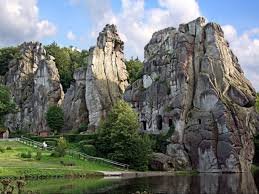
For those planning a visit, the Externsteine offers a profoundly moving experience. The best time to arrive is early in the morning, not only to avoid the crowds but to witness the morning mist weaving through the pillars, enhancing their mystical atmosphere. While access to the main area is free, purchasing a ticket to climb the internal staircases to the summit and the chapel is essential for the full experience. The climb is steep and narrow, but the view from the top over the surrounding forest is breathtaking. The nearby information center provides valuable historical context, though it rightly focuses on the verifiable Christian medieval period. Be sure to spend time walking the tranquil trail around the adjacent Wiembecke Pond, which offers the classic, stunning reflection shot of the stones. Whether you are a historian, a spiritual seeker, or simply a lover of unique natural wonders, the Externsteine does not disappoint. It is a place that commands contemplation, a site where the weight of centuries of belief, conflict, and wonder is felt in the cool stillness of its grottos and on the windswept heights of its ancient altars.
Go to main page